Education for Sustainability (EfS) offers you a foundation for designing or revising courses, assessments and learning experiences that prepare students to navigate and shape a world defined by change, uncertainty, risk and complexity. Whether you're developing a new course, refreshing an existing one, or aligning programme-level learning outcomes, this overview explains what EfS is, how it developed and why it matters for your teaching.
What Education for Sustainability stands for
Sustainability challenges present as wicked problems that produce what Vogel et al. (2023) call super complexity - where issues spread across interconnected (human and ecological) systems involving multiple stakeholders with competing interests. EfS thus prepares people to cope with, manage and shape social, economic and ecological conditions characterised by change, uncertainty, risk and complexity (Sterling 2008, 9). It represents 'a change of educational culture' that combines both theoretical and practice-based knowledge (Sterling 2008, 14). Effective EfS develops students' sustainability competencies - the socio-emotional and behavioural capacities that enable them to act on their knowledge (Vogel et al., 2023). Moreover, EfS pedagogies offer opportunities to develop such competencies by creating participatory and learner-centred educational experiences, grounding learning in real context-specific issues, making space for collaboration and critical reflection among students, and helping them understand how their personal experiences connect to broader social and ecological systems (Vogel et al., 2023 and Kennelly et al. 2012). Ultimately, this approach supports students in building a 'sustainability-oriented mindset' (Žalėnienė and Pereira 2021).
How Education for Sustainability emerged
EfS emerged from Environmental Education (EE), which gained prominence in the 1970s-1990s following the 1972 UN Conference on the Human Environment (Uggla and Soneryd 2023). The shift from EE to EfS happened gradually through the 1990s, prompted by the 1987 Brundtland Report and the 1992 Earth Summit in Rio. This wasn't just a name change - it marked a pedagogical shift (Uggla and Soneryd 2023; Macintyre, Tilbury, and Wals 2024) as it extended attention from educating on strictly environmental issues to include discussions on how to encourage social and human development within planetary boundaries, envisioning pathways to desirable futures (Stevenson 2006, Uggla and Soneryd 2023 and Macintyre, Tilbury, and Wals 2024). The 2015 Sustainable Development Goals (SDGs), adopted by the United Nations in 2015, accelerated this shift. The 17 SDGs set global objectives for ending poverty, reducing inequality, addressing climate change, and promoting health, education, and sustainable economic growth while protecting natural ecosystems.
“Learning to change the world! What is Education for Sustainable Development?". Visit UNESCO’s website to find out more.
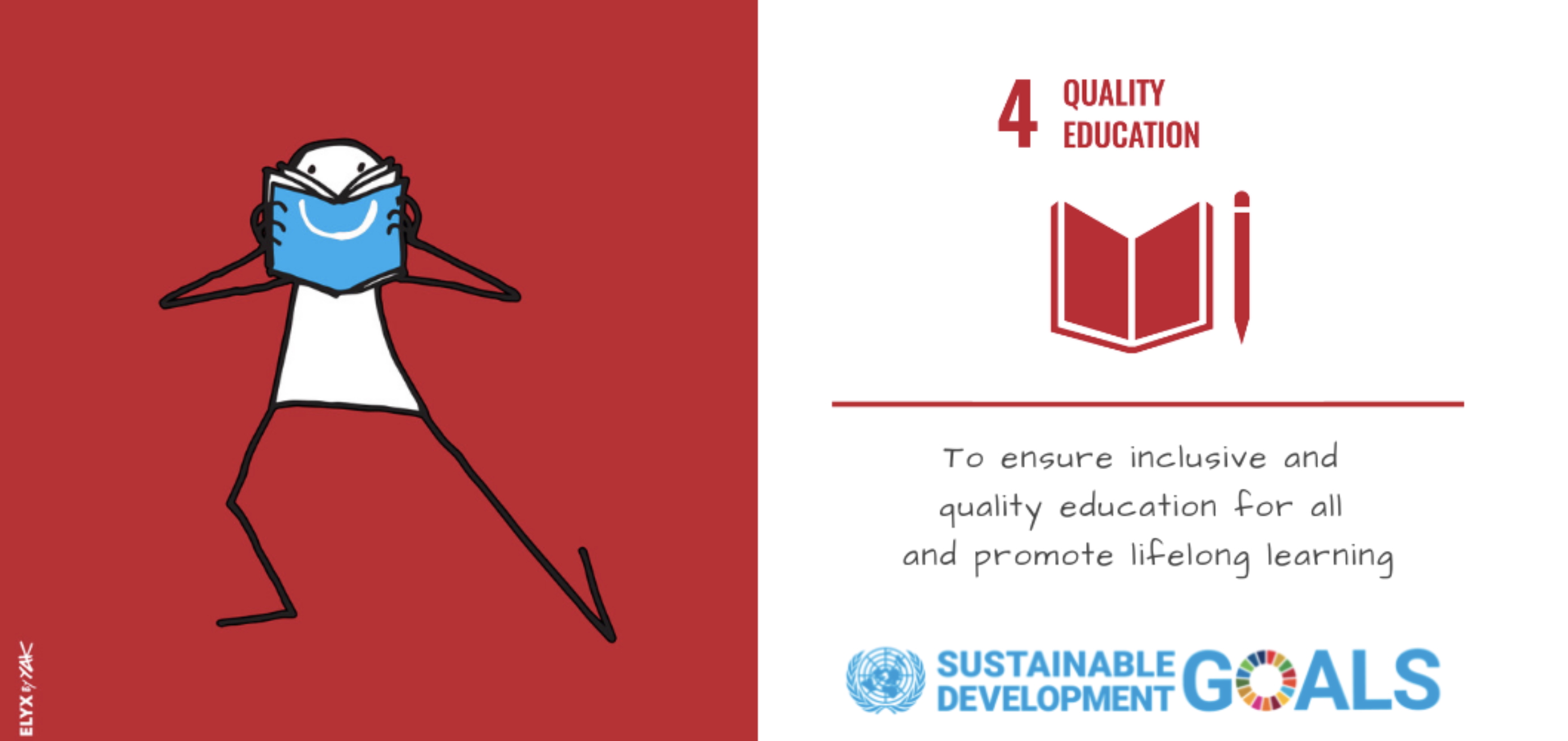
In particular, SDG4: Quality Education recognises education as a key enabler for sustainable development, reinforcing UNESCO‘s mandate to advance education for sustainable development worldwide. According to the United Nations, sustainable development refers to "meeting the needs of the present without compromising the ability of future generations to meet their own needs" (World Commission on Environment and Development 1987).
Many institutions now use the SDGs to map sustainability across curricula and design learning outcomes - for example, the University of Leicester directly integrates the SDGs into their curriculum design approach.
-
Critical reflection Reflexive accounts, learning journals, discussion groups
-
Systemic thinking and analysis Real-world case studies and critical incidents, project-based learning, stimulus activities, campus as a learning resource
-
Participatory learning Group or peer learning, developing dialogue, experiential learning, action research/learning to act, and developing case studies with local community groups and business
-
Collaborative learning Guest speakers, work-based learning, interdisciplinary/ multidisciplinary working
-
Thinking creatively for future scenarios Using role play, real-world inquiry, futures visioning, problem-based learning
The HE sector has a unique role and responsibility in protecting the planet and delivering on the United Nations’ Sustainable Development Goals (SDGs). This requires research that makes progress against the SDGs and graduates with the core sustainability competencies required to address financial, environmental and social sustainability. However, 1.7% of Global World Product (GWP) is spent in Higher Education, so the sector also has to take approaches to their people, practices and places that are consistent with the goals.
Advance HE in collaboration with Times Higher Consultancy have developed a range of products for institutions and governments to support the higher education sector to promote and utilise the SDGs to drive institutional change across research and culture, curricula and civic responsibility.
Find out more on their website.
SOS-UK is a student-led education charity focusing on sustainability that:
- delivers programmes and campaigns that enable students and society to act on sustainability;
- offers a range of learning opportunities and events to support sustainability action across the education sector and beyond;
- carries out specialist research into sustainability and social responsibility of the education sector in the UK and internationally;
- offers a range of services and packages to help drive sustainability through higher education institutions.
-
Advance HE & Quality Assurance Agency for Higher Education (2021), Education for Sustainable Development guidance – Executive Summary.
-
AdvanceHE: Education for Sustainable Development Guidance
-
AdvanceHE: Practice Guides to support Education for Sustainable Development
-
Barth, M., Michelsen, G., Rieckmann, M., & Thomas, I. (2018) Routledge handbook of higher education for sustainable development. Earthscan from Routledge.
-
Blake, J., Sterling, S. & Goodson, I. (2013), Transformative Learning for a Sustainable Future: An Exploration of Pedagogies for Change at an Alternative College, Sustainability.
-
Corcoran, P., Calder, W. & Clugston, R. (2002), Introduction: higher education for sustainable development. High Educ Policy 15, 99–103.
-
Dumas, Marion (2019), The case for universal climate education in universities, LSE Blogs.
-
Gamage, Kelum A. A., and & Gunawardhana, N. (2022), The Wiley Handbook of Sustainability in Higher Education Learning and Teaching. Wiley Handbooks in Education. Hoboken, NJ: Wiley-Blackwell.
-
Higgins, K., & Calvert, A. (2024). CRAFTS: Co-Designing Reflective Approaches for the Teaching of Sustainability. Journal of Education for Sustainable Development, 18(1), 45-55.
-
International Association of Universities (IAU): What is Higher Education and Research for Sustainable Development (HESD)?
-
Jones, P., Selby, D. & Sterling, S. (2010) Sustainability Education: Perspectives and Practice across Higher Education, Earthscan: London & Washington, DC
-
Liew, Pik (2021), Introducing sustainability to undergraduate module assessment in accounting - LSE
-
McCowan, Tristan (2023), Reimagining sustainability - A key role for higher education, University World News.
-
NUS case studies – Embedding sustainability in UK HFE
-
Pavlova, Margarita (2013) Towards using transformative education as a benchmark for clarifying differences and similarities between Environmental Education and Education for Sustainable Development, Environmental Education Research, 19:5, 656-672.
-
Purcell, W.M. (2021), Higher Education And The Sustainable Development Goals
-
Purcell, W.M. and Haddock-Fraser, J. (2021), The Bloomsbury Handbook on Sustainability. In Higher Education: An Agenda for Transformational Change.
-
Purcell, W.M., Henriksen, H. and Spengler, J.D. (2019), Universities as the engine of transformational sustainability toward delivering the sustainable development goals: “Living labs” for sustainability, International Journal of Sustainability in Higher Education, Vol. 20 No. 8, pp. 1343-1357.
-
Santos, Gabbie (2021), Bringing academic research and the ‘real world’: LSE Public Research Partners for Civic Engagement, LSE Blogs
-
Simone Strambach (2017) Combining Knowledge Bases in Transnational Sustainability Innovation: Microdynamics and Institutional Change, Economic Geography, 93:5, 500-526.
-
The Forum on Education Abroad - Advancing the UN Sustainable Development Goals through Education Abroad
-
UN SDG Learn - UN-led initiative that provides useful and curated learning solutions on sustainable development topics.
-
University of Gloucestershire (2011), Education for Sustainability: A Guide for Educators on Teaching and Learning Approaches
-
University of Plymouth: 7 Steps to Embedding sustainability in your teaching
-
University of Plymouth: Sowing Seeds – How to make your modules a bit more sustainability related
-
Vann, J.; Pacheco, P.; Motloch, J. (2006) Cross-cultural education for sustainability: development of an introduction to sustainability course. Journal of Cleaner Production 14(9): 900-905.
-
Winter, J. & Cotton, D. (2012), Making the hidden curriculum visible: sustainability literacy in higher education', Environmental Education Research, 18:6, pp. 783 – 796.
-
Wyness, L. (2015) Education for Sustainable Development Pedagogy: Criticality, Creativity, and Collaboration, PedRIO Occasional Paper 8: University of Plymouth.