Meet Hannah, Tania and Zoe, three Anthropology students who have studied at both LSE and the University of Cape Town. Zoe, based at the University of Cape Town, studied abroad at LSE for the 2023-2024 academic year. Hannah and Tania are LSE Anthropology students who are about to finish their time at the University of Cape Town. Their experiences cultivated a friendship that spans from the UK to South Africa. You can read more about the similarities and differences between studying at LSE and the University of Cape Town, how study abroad has shaped their aspirations, and advice for future study abroad students in this interview.
Introductions: learn more about Zoe, Hannah and Tania.
Zoe Maralack: During my final year at UCT, I became the first student from UCT to receive funding to go to LSE through the Birley-Walker Scholarship. At UCT and LSE, I studied Social Anthropology and have since graduated with Honours from UCT. My Honours thesis research explored how a local, woman-led seamstress studio creates beauty, care and intergenerational connections through their Cape Malay heritage. This year, I’m working part-time at UCT as a Teaching and Research Assistant.
Hannah Trapmore: I’m going into my final year of Anthropology as LSE as an undergrad. I’ve lived and worked in South Africa and Kenya before, so when I found out that there was a year abroad opportunity in Cape Town, I applied and now have been here for a year. At LSE, I have done minors in politics and history, but being at UCT has slightly broadened my horizons and I'm now studying African Musical Instruments and Sculpture. When I get back to London, I’m looking to do a law conversation, a path which my year abroad gave me the time to discover.
Tania Pavlova: I study Anthropology at LSE, but I have a very broad range of interests. I’m interested in interdisciplinary perspectives and how social and natural sciences and creative arts can collaborate. At UCT, I’ve hopped between the Music and Media Departments, and the Faculty of Sciences and Humanities. In my second year at LSE, I did a bit of neurodivergent student advocacy as a part of the Neurodivergent Student Academic Mentor scheme.
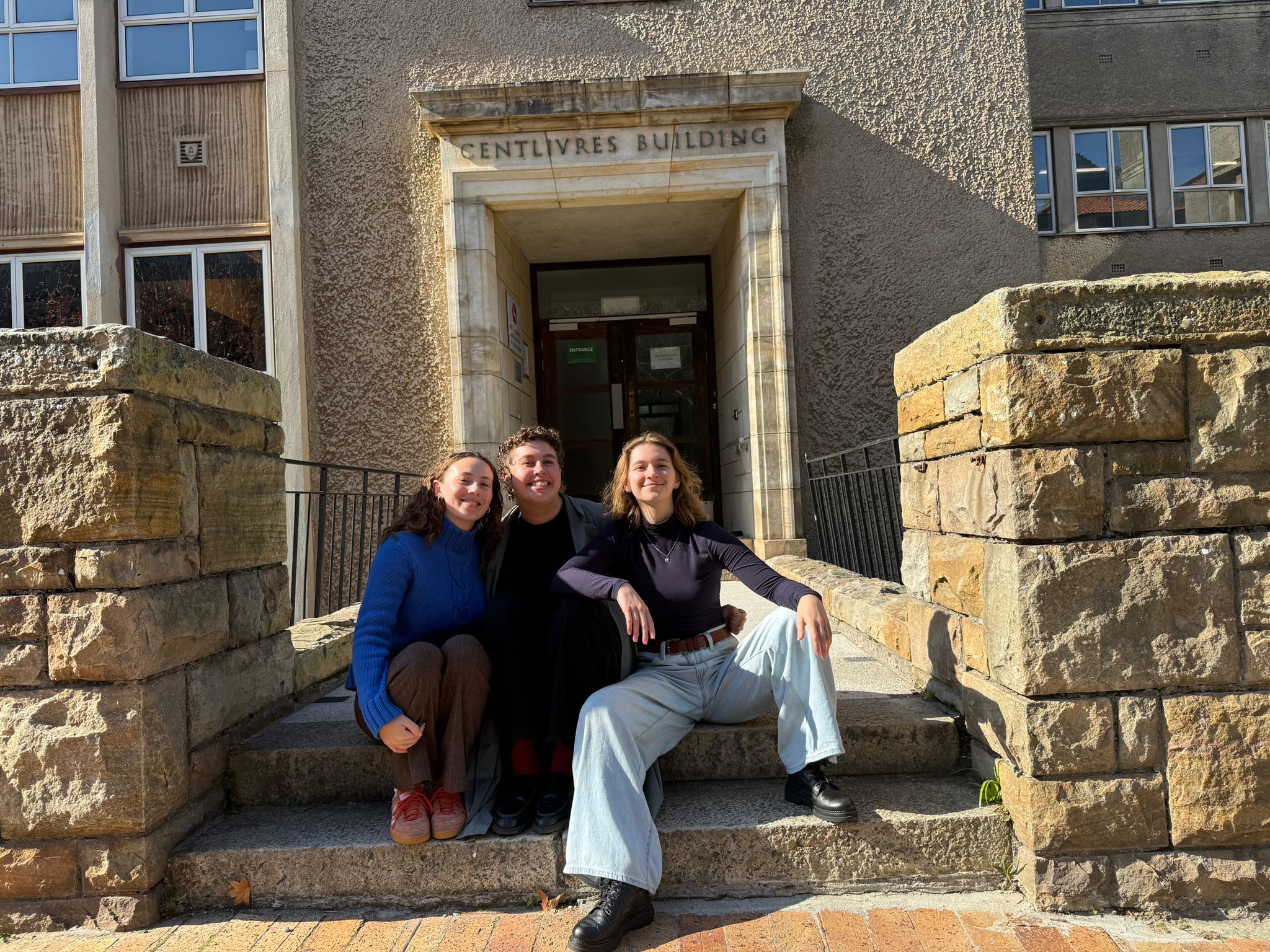 From left to right: Zoe, Hannah and Tania posing together at UCT.
What is a day-in-the-life at LSE like, versus a day-in-the-life at UCT?
Hannah: Time on LSE’s campus actually becomes a smaller part of my week. I have lots of reading to do, but I can do that from anywhere, so I spend more time exploring London in a self-guided way. My timetable at UCT is Monday to Friday, so the contact hours on campus are a lot higher.
Zoe: I had a similar experience to Hannah. At UCT, I was used to being on campus five days a week, and I would have lectures every single day, plus we’d have long tutorials or seminars where we’d have discussions and in-depth conversation about academic topics. Lectures at UCT are a lot more conversational than LSE, because the professor will always involve the class and integrate discussions. At LSE, classes were short, which gave me more time to explore London. I would often stroll down to Covent Garden or the Thames whereas at UCT you’re more cut-off location-wise and can’t walk to the beach or city.
Tania: I think one of the biggest culture shocks coming to South Africa was how often I was expected to be on campus, in classes, with multiple lectures a week. LSE gives me the experience of comprehending massive amounts of text very quickly and efficiently, so that I am prepared to speak in my seminars which make up a small portion of my week. At UCT, the experience requires you to keep up to academic standards in a different way, because every single tutorial is graded, and you’re in lectures and tutorials for hours and hours every week. The campuses also differ, where LSE is an urban-integrated, but pedestrianized campus. UCT is halfway up the mountain, and you can see a lot of Cape Town from it. The buildings are covered in vines, so the campus looks very different.
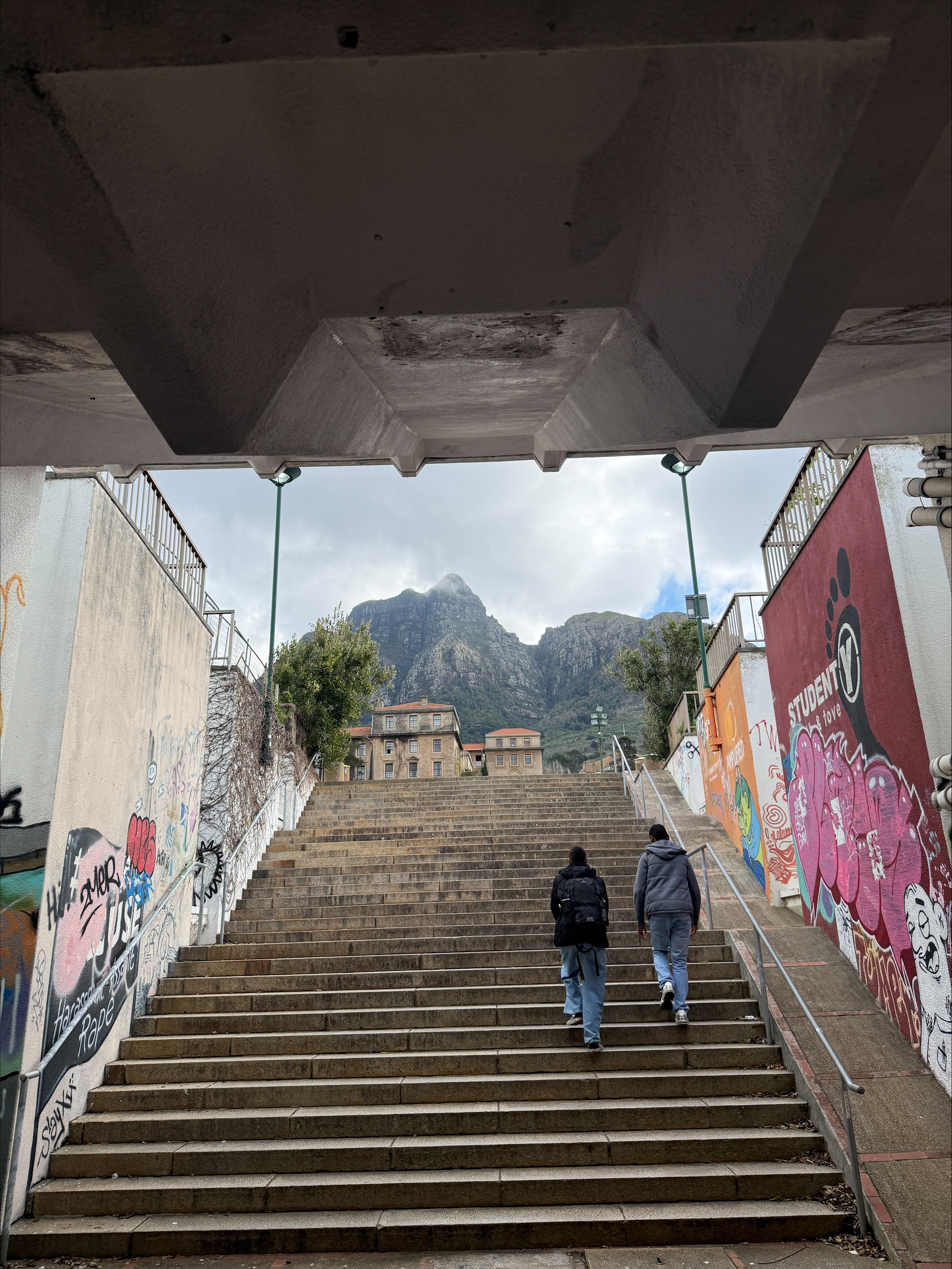 UCT and LSE differ significantly in their campus landscapes.
What surprised you the most about living in South Africa and Cape Town versus the UK and London?
Zoe: Coming from Cape Town, the city is huge, but spread out, and very intertwined in nature, with the beach and the mountains, and lots of suburbs. The university is literally in the mountains, and you literally hike up to campus. So, it was very interesting to come into a densely populated city like London, with huge apartment buildings. The environment shaped my experience. At UCT, I often feel quite calm because I can always go outside for a walk and look at the scenery. AT LSE, I would walk off campus and still feel like I was in a big bustling city, and there are millions of people around me.
Hannah: London will always be home, but going off what Zoe just said, it’s very much the same for me coming to UCT. It’s been so nice to be able to finish a lecture and drive to the beach. I sit there with my laptop and work, then go for a swim. That is absolutely something you do not get in London. I’m also able to spend time doing these types of outdoor activities because my year abroad doesn’t count on my transcript. It’s a unique circumstance that allows you to focus on different things.
Tania: There are a lot of things that surprised me. First, London and Cape Town are obviously in different hemispheres, which have a lot of micro differences. For example, I noticed when I first arrived that when I looked up into the night sky, the constellations were different. I have never experienced that, because although I’ve been fortunate enough to do some travelling, it was never to a different hemisphere. Of course, this comes with the flip of seasons, too.
I second Hannah and Zoe’s point of London being an exceptional metropolis. It’s unbelievably huge. Cape Town is very large, but the areas you would do most of your life in are not that large compared to London. The geographical differences are also big. In London, we have some great parks, but it’s not the same as walking up and seeing the mountains and the coast at the same time. It’s crazy when you stand and look at the sea and think, if you kept going South the next thing you’d hit is Antarctica.
I’d also be remiss if I didn’t mention the legacy of the countries. Cape Town is particularly visibly shaped by its political history. Post-apartheid South Africa is, in the grand scheme of things, very young. There is a lot being done to mitigate this legacy, but it’s very sobering to come here and see how much it still affects the city. Many of the houses have electric fences, and there are parts of the city that are in painful contrast in terms of deprivation. Studying here, you appreciate the social responsibility you have, especially as someone in the social sciences.
Zoe: I think that for someone coming from LSE to UCT, I can imagine it being an incredible experience to see how strongly politics are ingrained into university life. There is a very strong Student Representative Council at UCT, and there are often protests. The university is socially aware and conscious. Of course, there are politics at LSE, but it’s different than at UCT, where political action is more ingrained in the culture.
Hannah: Also, at UCT, they integrate global events into lectures very strongly. You walk into a lecture and talk about conflict. You might not always finish the lecture material, but the lecturers make the conversation relevant to current global events.
Tania: I find this experience at UCT very inspiring. There’s a real imperative that what you do needs to be useful in some way. Like, you need to have some sort of contribution or function beyond purely academia. This is something I want to do more at LSE, thinking about how we can practically bring our work to public spaces.
 Hannah, Tania and Zoe all agreed that the geography of South Africa shaped their experience at UCT, noting the immense beauty of the nearby mountains and ocean.
What is something you’ve learned while studying at UCT and LSE that’s changed the way you think?
Zoe: I think something I’ve learned is actually a perspective. UCT students are pretty much all from South Africa or Southern Africa, and I’ve never experienced the perspective of so many people from so many different places, such as at LSE. That is a really fundamental part of what I experienced at LSE, being able to learn about other people's cultures, from all over the world. It was a big benefit to my time at LSE.
Hannah: Because my year abroad is self-funded and non-credit bearing, I had to think a lot about what I wanted to take away from this experience. Studying abroad provides the space to explore who you are as a person, what you want to do and learn new things. I’ve had the chance to reconnect with art and music in a way that I would never have gotten to do at LSE, purely because I’ve had the time to do so. I’m returning to LSE feeling motivated for further study, and excited to begin a career—in a way I was not before studying abroad.
Tania: Similar to Hannah, one of the reasons why I really wanted to spend a year abroad is because I’m a person with a wide range of interests. I really enjoy that LSE is so specialised. It’s given me a political awareness and analytical acuity, specifically in the social sciences, that I wouldn’t have gotten in many other places. Simultaneously, I wanted more variety. Coming to UCT, I immediately went into the Human Evolution and Archaeology Department, which is a fantastic course. It was powerful to think biologically in combination with the social sciences. Studying at the UCT College of Music has also been fantastic. Being in classrooms where people are like, I’m gunning to become a filmmaker, scientist, artist, all in the same place; you remember that there is a breadth to strive for.
Zoe: I would say my experience was quite the opposite of Hannah and Tania in these ways, because I’ve never been in such a formal environment in my entire life. Being at LSE made me become very self-confident, being in such an internationally high-esteemed environment, alongside such diverse students. It expanded my horizons of job opportunities, because in South Africa the job economy is awful. To see the kinds of job opportunities in the UK, and make use of the careers service at LSE, I learned about possibilities I would have never had the knowledge of without going to LSE. It taught me how to network and get on LinkedIn, which actually is a vital skill that put me ahead of my peers in South Africa.
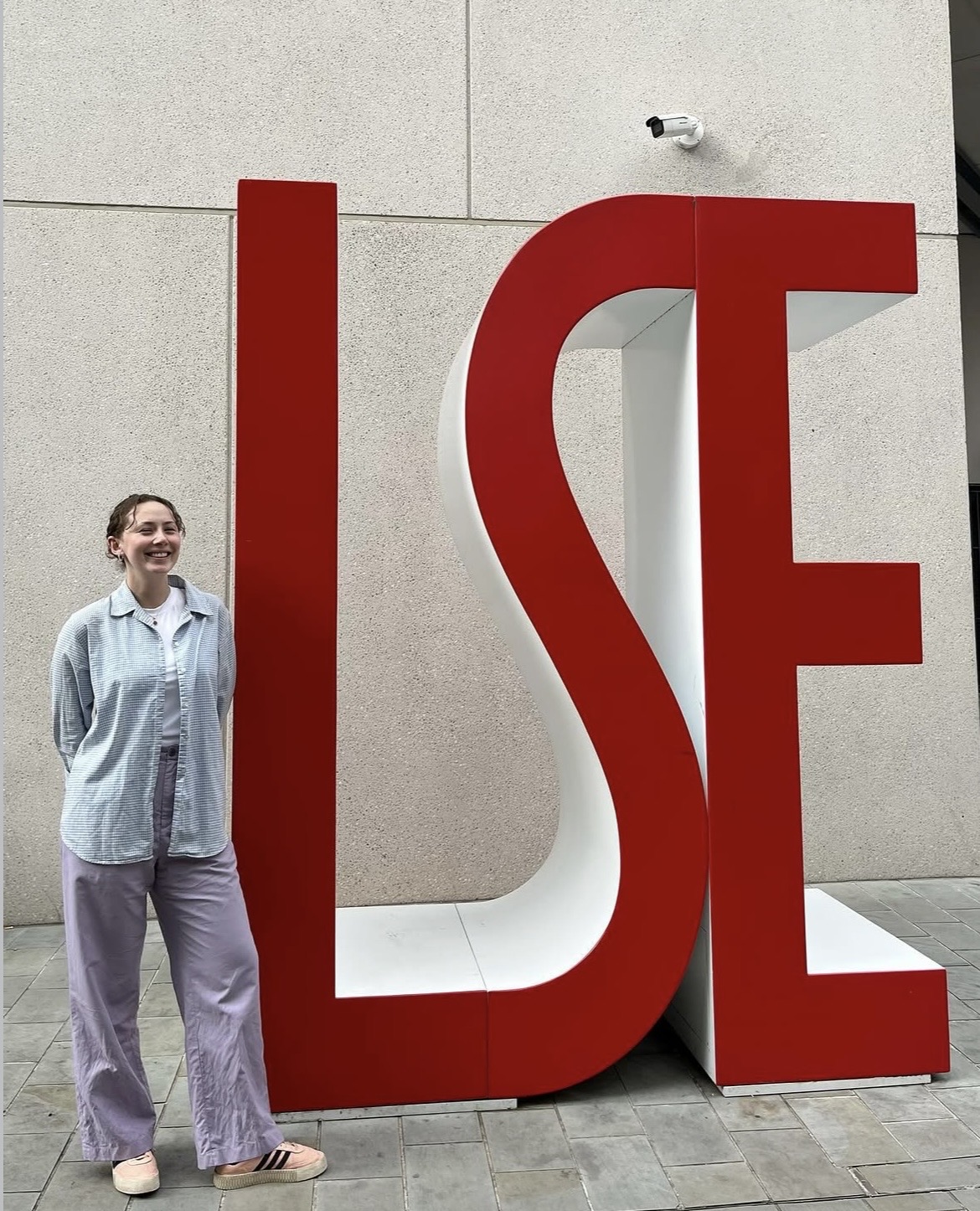 Zoe standing in front of the iconic red LSE letters on campus.
What is one piece of advice you would give to someone that’s looking into an experience abroad like yours?
Hannah: I would say just make the absolute most of the people and support network around you. The only reason it was so easy for me to find somewhere to live before I came and felt relaxed was because I was already connected to Zoe. Also, take time to learn about the academic timelines at the place you’re going to be studying at.
Zoe: Since I was the first person from UCT to go on this exchange, the experience was hard, and somewhat uncharted. I would recommend diving into the arts and culture aspects that London offers sooner than later - which I didn't do. I went to a new museum every weekend for my second term because there are like, a thousand museums and art exhibitions, and so many of them are free which is incredible. It also made my time in London so much more enjoyable during the winter. This was my first winter in the Northern Hemisphere, and it was honestly quite depressing compared to South Africa. So going to and doing stuff really helped me. If I could change it, I would have spent extra time in London after the end of the academic year and see a different side of the city in the summer, which seems more vibrant.
Hannah: Also, say yes to every opportunity that comes your way. Like, I’m studying sculpture, but I’m not an artist. I’ve never been an artist. But I was given the opportunity to work for a grassroots artist collective in Cape Town, get involved in the art scene and make some incredible friends. I’ve done so many cool things only by the virtue of saying ‘yes’ to experiences that I would have never had in London. I will remember this experience so fondly for the rest of my life.
Tania: Nobody is going to say that studying abroad isn’t a challenge. That’s partially the point of it, that it is a challenge. It’s often quite difficult to adapt to the different ways that things are done, ranging from academics to the infrastructure of the city to the way that you’re used to people interacting. The fact that it can be intimidating doesn’t mean that you should not do it. A few weeks ago, I was sitting with a friend on Signal Hill, looking out on the sunset over the ocean from the mountain and thinking, ‘wow, I cannot believe that I get to do this.’ It’s everything from the life skills to the confidence that you develop, to the learning and friends you gain. It’s absolutely worth it, even if you’re on the fence.
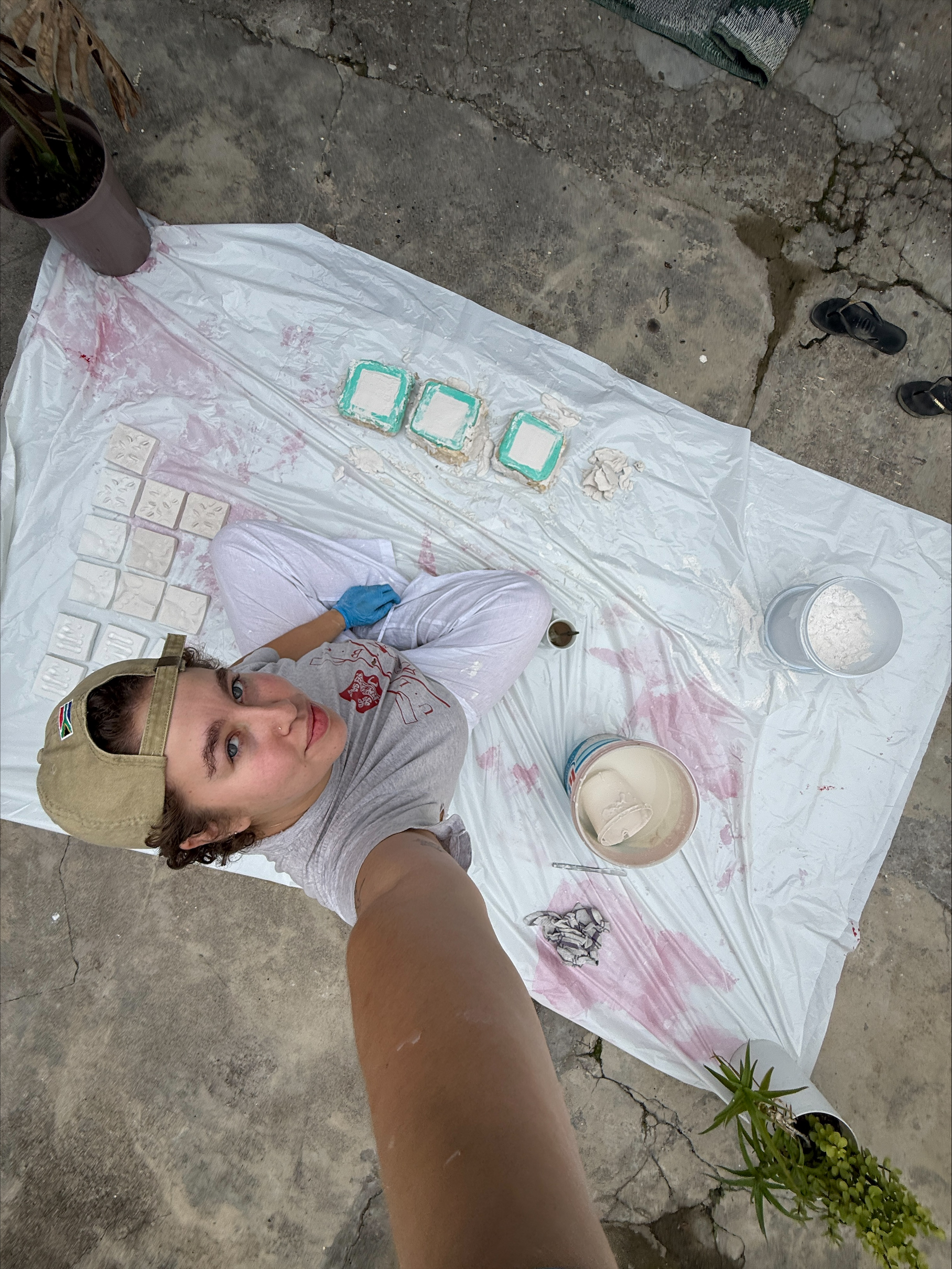 Studying abroad gave Hannah the ability to explore the local art scene in Cape Town.
  Tania's view after volunteering with the Southern African Foundation for the Conservation of Coastal Birds.
The photos featured in this piece were kindly provided by Hannah, Tania and Zoe.
Want to stay up to date with LSE’s International Strategy and Academic Partnerships team? Be the first to know about international projects by subscribing to our newsletter.