Waste at LSE
Waste is often framed as a matter of individual behaviour. At LSE, we treat it as a systems and resource management challenge.
As a dense, central London campus with limited space and a constantly changing population, large volumes of materials move through the School each year. Reducing waste is therefore about how systems are designed, how long materials stay in use, and how surplus is managed responsibly when it cannot be avoided.
Waste recycling points on campus:
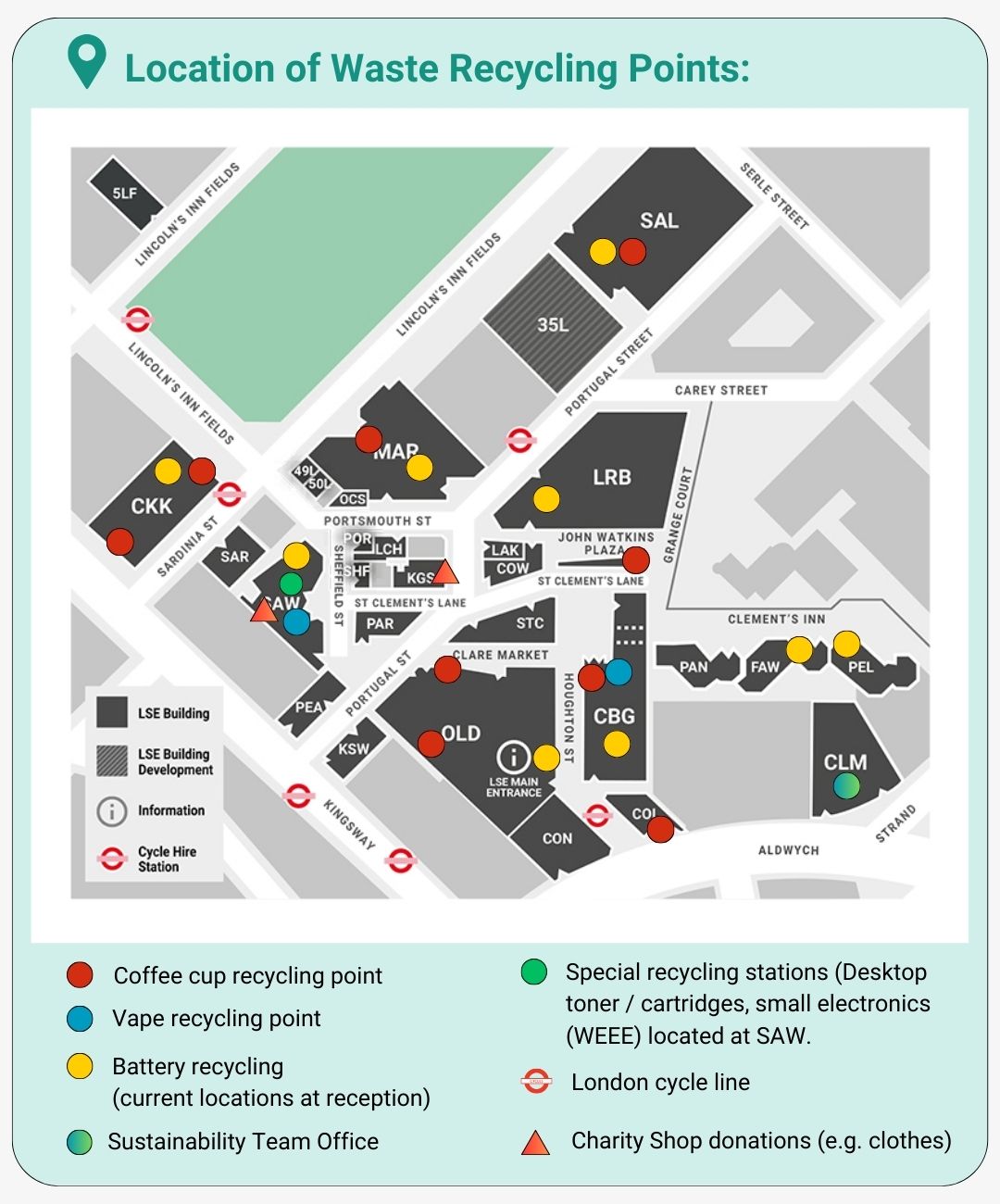
Clear guidance on what goes where is provided through LSE’s Facilities Guide.
Our approach
LSE’s approach to waste and resources focuses on three principles:
- preventing waste through design and procurement choices
- keeping materials in use for as long as possible
- managing unavoidable waste responsibly, with no landfill disposal
This reflects a shift away from a linear “use and dispose” model towards a more circular approach to managing resources at scale.
Preventing waste through system design
The most effective way to reduce waste is to prevent it from being created in the first place.
At LSE, this means:
- reducing reliance on single-use items through service design
- making reusable and lower-waste options the default where possible
- working with suppliers to reduce unnecessary packaging
- designing events, services and operations to minimise waste generation
Many of the most impactful waste reductions happen upstream, before materials ever reach a bin.
Keeping materials in use
When waste cannot be prevented, extending the life of materials delivers the greatest environmental benefit. These approaches complement, rather than replace, efforts to reduce consumption at source.
At LSE, this includes:
- internal reuse and redistribution of furniture and equipment
- long-term partnerships with organisations such as British Heart Foundation and TRAID, providing structured routes for managing surplus clothing and household items created by term cycles and move-outs
- working with Book Rescuers to enable the resale and recycling of books that would otherwise be discarded
- supporting the LSESU RAG Charity Shop, which provides an on-campus reuse route while generating funding for charitable causes
- student-led reuse initiatives, particularly in halls of residence
These partnerships function as infrastructure for material recovery, helping manage large volumes of surplus safely and transparently, while creating social value beyond the campus.
Recycling and food waste
Where materials cannot be reused, LSE aims to recycle as much as possible and manage the remainder responsibly.
Across campus:
- mixed recycling and food waste collections are provided
- systems are designed to be consistent and easy to use
- waste contractors are required to meet high environmental standards
Reducing disposable cups
Disposable cups are one of the most visible waste streams on campus and one of the easiest to reduce through system design.
LSE promotes reusable cup schemes across campus cafés, supported by discounts and clear infrastructure. The emphasis is on normalising reuse, rather than expecting individuals to purchase new products or make additional effort.
Waste in halls of residence
Halls of residence are a major source of waste due to high turnover and limited storage space.
LSE works with students in halls to:
- manage surplus during move-in and move-out periods
- reduce waste during peak pressure points in the academic year
- support consistent recycling and food waste separation
These initiatives focus on collective systems, recognising that individual circumstances, time and resources vary.
Managing waste safely and responsibly
Some waste streams require specialist handling, including confidential, electrical and hazardous waste.
LSE works with specialist contractors to ensure these materials are managed safely, legally and transparently, in line with environmental regulations. Operational guidance for staff is provided through Estates and Facilities channels.
What can I do?
Waste reduction is most effective when systems are designed to minimise waste and keep materials in use. Individual actions matter most when they work with these systems.
You can contribute by:
- using shared reuse, recycling and food-waste systems correctly
- choosing reusable options where they are already provided
- taking part in collective reuse initiatives in halls or departments
- planning activities and events with waste reduction in mind
Many effective actions involve using shared infrastructure, rather than buying new “sustainable” products.